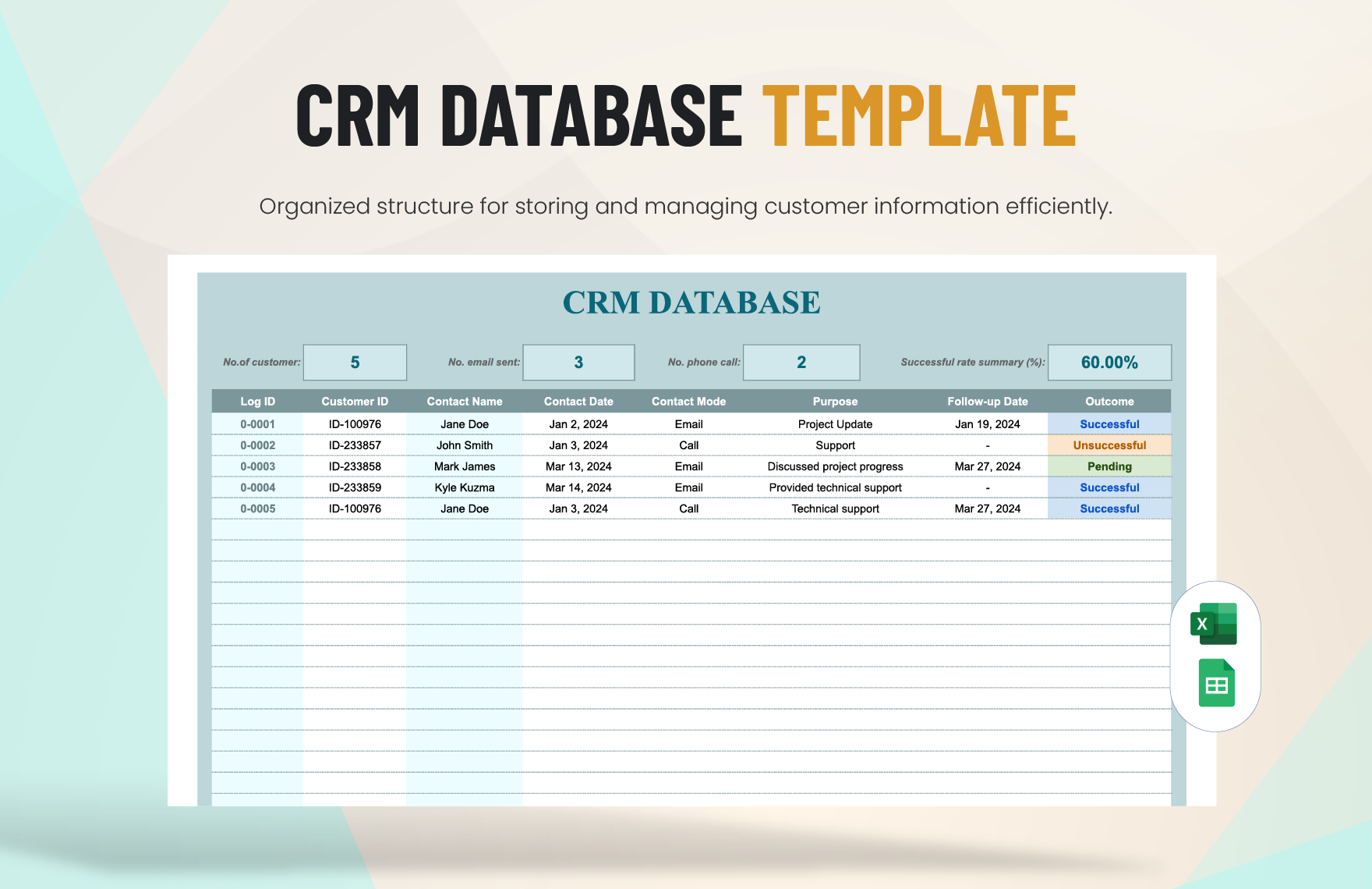
Welcome, dear reader, to an exploration of the incredible power of CRM Excel database in streamlining your customer relationship management. Managing customer relationships effectively is crucial for any business looking to thrive in today’s competitive market. By utilizing Excel as a CRM tool, businesses can centralize customer data, track interactions, and analyze customer behavior more efficiently. This article will delve into the benefits of using Excel as a CRM database and how it can help businesses enhance their customer relationships and drive success. So sit back, relax, and let’s discover how Excel can revolutionize your CRM strategies.
Benefits of Using Excel for CRM Database
Excel is a versatile tool that can be used for a variety of purposes, including managing customer relationship data. One of the main benefits of using Excel for CRM databases is its ease of use. It is a familiar software for many people, as it is commonly used for tasks such as creating budgets, keeping track of expenses, and analyzing data. This means that employees are likely already familiar with Excel and will require minimal training to start using it for CRM purposes.
Another advantage of using Excel for CRM databases is its flexibility. Excel allows users to customize their databases to fit their specific needs. They can easily add or remove columns, create custom formulas, and format the data in a way that makes sense to them. This flexibility is especially useful for businesses that have unique CRM requirements or want to track specific metrics that may not be available in off-the-shelf CRM software.
Excel also offers powerful data analysis tools that can help businesses make informed decisions. Users can create pivot tables, charts, and graphs to visualize their CRM data and identify trends or patterns. This can be particularly useful for businesses that want to analyze their customer data to identify opportunities for upselling, cross-selling, or improving customer satisfaction.
Furthermore, Excel is a cost-effective solution for businesses that may not have the budget for more expensive CRM software. Many businesses already have access to Excel as part of their Microsoft Office subscription, so there is no additional cost associated with using it for CRM purposes. This can be especially beneficial for small businesses or startups that are looking for a simple and affordable way to manage their customer data.
Lastly, Excel allows for easy collaboration and sharing of CRM data. Users can easily save their Excel files to a shared network drive or cloud storage service, allowing multiple team members to access and update the data in real-time. This can streamline communication between team members and ensure that everyone is working with the most up-to-date information.
How to Organize CRM Data in Excel
Organizing CRM data in Excel is crucial for maintaining an efficient and effective database. By following some simple guidelines and best practices, you can ensure that your data is clean, organized, and easily accessible. Here are some tips on how to properly organize your CRM data in Excel:
1. Create a clear naming convention: When creating your Excel spreadsheet, it’s important to establish a clear naming convention for your columns. This will make it easier to identify and locate specific data points later on. For example, use descriptive column headers like “Contact Name,” “Company Name,” “Phone Number,” etc. This will help you easily navigate your data and extract the information you need.
2. Use separate sheets for different types of data: To avoid clutter and confusion, consider using separate sheets within the same Excel workbook for different types of CRM data. For example, you can have one sheet for contact information, another for sales data, and a third for customer feedback. This will help you keep your data organized and make it easier to locate specific information when needed.
3. Utilize filters and sort functions: Excel offers a range of filtering and sorting functions that can help you quickly rearrange and analyze your CRM data. Take advantage of these tools to organize your data by specific criteria, such as alphabetical order, date, or numerical value. This will make it easier to identify trends, track progress, and make data-driven decisions.
4. Implement data validation rules: To maintain data accuracy and consistency, consider implementing data validation rules in your Excel spreadsheet. This feature allows you to set specific criteria for data entry, such as restricting input to a certain range of values or requiring a certain format for dates and phone numbers. By enforcing these rules, you can prevent errors and ensure that your data remains reliable.
5. Regularly update and review your data: It’s important to regularly update and review your CRM data to ensure its accuracy and relevance. Set aside time on a regular basis to enter new information, update existing records, and remove outdated data. This will help you maintain a clean and up-to-date database that can support your business operations effectively.
By following these tips and best practices, you can effectively organize your CRM data in Excel and make the most of your database. With a well-organized and up-to-date spreadsheet, you can streamline your workflow, improve data accuracy, and make informed business decisions based on reliable information.
Best Practices for Maintaining a CRM Excel Database
When it comes to managing a CRM Excel database, it’s essential to follow best practices to ensure data accuracy and efficiency. Here are some tips for maintaining your CRM Excel database:
Regularly Update Data: One of the most important aspects of maintaining a CRM Excel database is to regularly update the data. This includes adding new contacts, updating contact information, and removing any outdated or duplicate entries. By keeping the data up-to-date, you can ensure that your CRM database remains accurate and reliable.
Implement Data Validation: To prevent errors and inconsistencies in your CRM Excel database, it’s crucial to implement data validation rules. This can help ensure that only valid data is entered into the database, reducing the risk of incorrect information being stored. For example, you can set up validation rules for email addresses, phone numbers, and other important fields to ensure that the data entered meets specific criteria.
Regularly Back Up Your Database: Another important practice for maintaining a CRM Excel database is to regularly back up your data. This will help protect your database from unforeseen events such as system crashes, data corruption, or accidental deletions. By regularly backing up your database, you can ensure that you have a secure copy of your data that can be easily restored in case of any issues.
Organize Data Efficiently: Properly organizing your CRM Excel database is key to maintaining its usability and effectiveness. This includes using clear and consistent naming conventions for fields, tabs, and sheets, as well as organizing data in a logical and structured manner. By keeping your data well-organized, you can easily find the information you need and prevent confusion or inefficiencies when using the database.
Train Users on Data Entry: To maintain the integrity of your CRM Excel database, it’s important to train users on proper data entry practices. This includes educating them on the importance of accuracy, completeness, and consistency when entering data into the database. By providing training and guidelines for data entry, you can help ensure that the data in your CRM database remains reliable and error-free.
Regularly Audit and Cleanse Data: Lastly, conducting regular audits and data cleansing activities is essential for maintaining a clean and accurate CRM Excel database. This involves reviewing data for inconsistencies, errors, and outdated information, and taking steps to correct or remove any issues identified. By regularly auditing and cleansing your data, you can improve the quality of your CRM database and ensure that it continues to meet the needs of your organization.
By following these best practices for maintaining a CRM Excel database, you can ensure that your data remains accurate, up-to-date, and reliable, ultimately helping you to make better-informed decisions and improve your overall business operations.
Integrating Excel CRM Database with Other Tools
When it comes to managing customer relationships effectively, integrating your Excel CRM database with other tools can significantly enhance your workflow and productivity. Here are some ways you can seamlessly integrate your CRM database with other tools to maximize its potential:
1. Email Marketing Platforms: Integrating your Excel CRM database with email marketing platforms such as MailChimp or Constant Contact allows you to easily segment your contacts and send targeted email campaigns. By syncing your CRM database with your email marketing platform, you can track customer interactions, monitor email campaign performance, and personalize communication for better engagement.
2. Social Media Management Tools: In today’s digital age, maintaining a strong social media presence is crucial for businesses. Integrating your CRM database with social media management tools like Hootsuite or Buffer enables you to monitor customer interactions on social platforms, track social media mentions, and engage with your audience in real-time. This integration also helps you analyze social media data to gain insights into customer behavior and preferences.
3. Customer Support Systems: Providing excellent customer support is essential for building long-lasting relationships with your customers. By integrating your Excel CRM database with customer support systems such as Zendesk or Freshdesk, you can centralize customer information, streamline support ticketing processes, and track customer inquiries seamlessly. This integration allows you to deliver personalized support to customers based on their purchase history and interactions with your business.
4. Project Management Tools: Integrating your CRM database with project management tools like Asana or Trello enhances collaboration and communication within your team. By syncing customer data from your CRM database to your project management tool, you can assign tasks, set deadlines, and track project progress more efficiently. This integration also allows you to prioritize customer-related tasks, allocate resources effectively, and ensure timely delivery of projects.
5. Marketing Automation Platforms: Automating marketing processes is essential for scaling your business and reaching a wider audience. Integrating your Excel CRM database with marketing automation platforms such as HubSpot or Marketo enables you to create personalized marketing campaigns, nurture leads, and track customer engagement across multiple channels. This integration also helps you analyze marketing data, measure campaign performance, and optimize your marketing strategies for better results.
By integrating your Excel CRM database with other tools, you can streamline your business operations, improve customer satisfaction, and drive growth for your business. Whether you are a small startup or a large enterprise, leveraging the power of integration can help you unlock the full potential of your CRM database and achieve your business goals more effectively.
Common Pitfalls to Avoid When Using CRM Excel Database
Using Excel as a CRM tool can be convenient and cost-effective for small businesses or startups. However, there are some common pitfalls that users should avoid to ensure the effectiveness of their database management. Here are five key pitfalls to watch out for:
1. Inconsistent Data Entry: One of the biggest challenges with using Excel for CRM is ensuring consistent data entry. Without proper validation rules and data quality checks, users may enter information in different formats or with varying levels of detail. This can lead to errors, duplication of records, and inaccurate reporting. To avoid this pitfall, establish clear guidelines for data entry, provide training for users, and regularly audit the database for consistency.
2. Lack of Security: Excel files are not designed to be secure databases. Sharing a CRM Excel file via email or storing it on a shared drive without password protection can put sensitive customer information at risk. To prevent unauthorized access and data breaches, consider using a dedicated CRM software with built-in security features or encrypting your Excel files with password protection.
3. Limited Scalability: While Excel is a versatile tool for managing small datasets, it may struggle to handle large volumes of data or complex relationships between records. As your business grows, you may find that your CRM Excel database becomes slow, unwieldy, and prone to errors. To avoid this pitfall, consider migrating to a more robust CRM solution that is designed to scale with your business.
4. Lack of Automation: Excel requires manual data entry and manipulation, which can be time-consuming and error-prone. Without automation features, such as workflows, alerts, and reminders, users may struggle to keep track of tasks, follow-ups, and deadlines. To maximize efficiency and productivity, consider integrating your CRM Excel database with other tools or investing in a CRM software that offers automation capabilities.
5. Difficulty in Collaboration: One of the drawbacks of using Excel for CRM is the lack of real-time collaboration features. Sharing an Excel file with multiple users can result in conflicting changes, version control issues, and communication gaps. To overcome this pitfall, consider using cloud-based collaboration tools, such as Google Sheets or Microsoft 365, to enable simultaneous editing, commenting, and sharing of your CRM data in a secure and efficient manner.
By being aware of these common pitfalls and taking proactive measures to address them, you can make the most of your CRM Excel database and drive better outcomes for your business.